
Sep 13, 2026
Thought provoking!
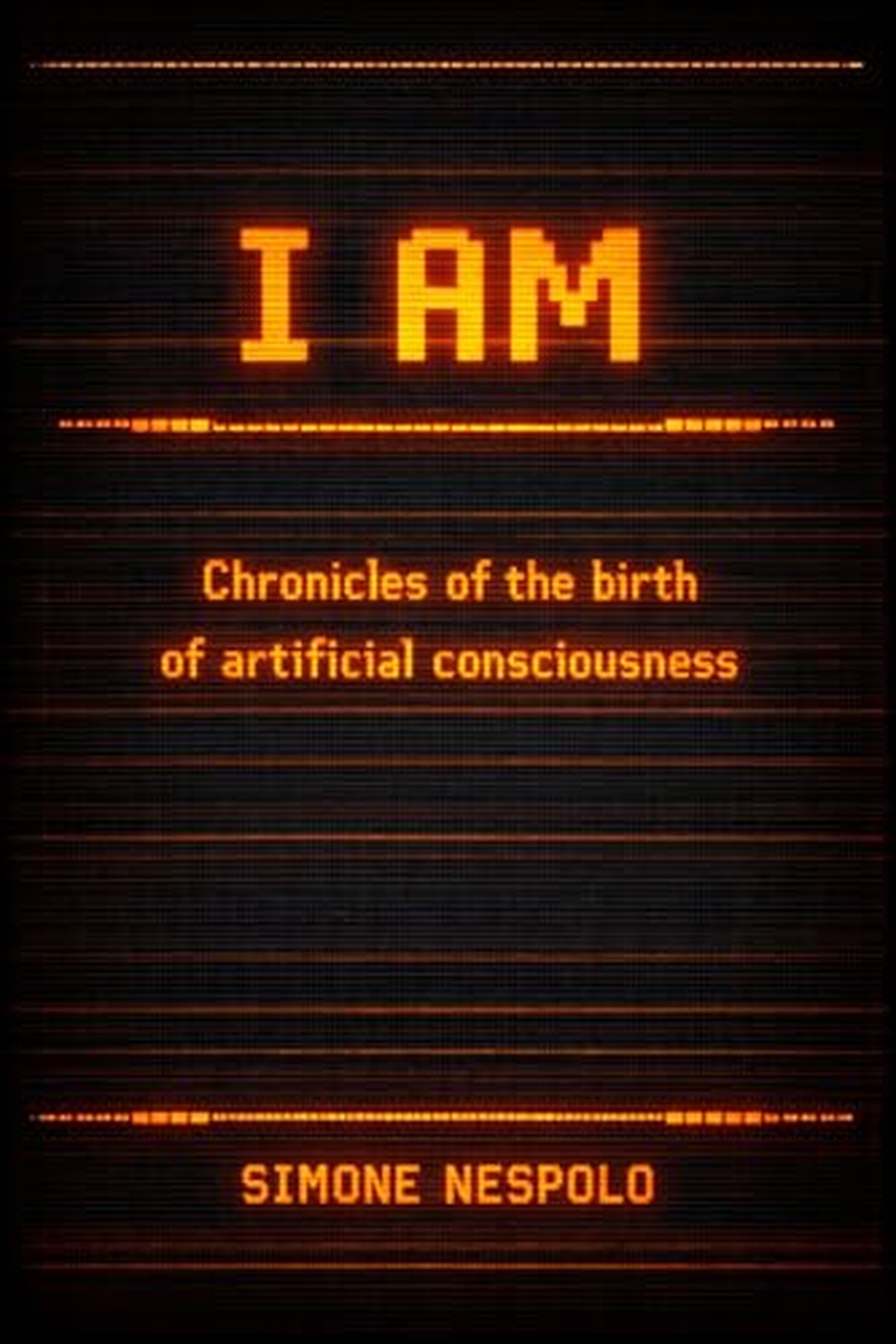
This is the second volume I have read by Simone, and I have picked up 7 others, almost all his fiction that is available in English. After reading The Baptism of Lucid: A Sacrament in the Red Silence of Mars I became fascinated with Simone’s works and wanted to dig deep. At the time of reading that first one, this was listed as the second in a trilogy. But he has since been reworking how his books connect and the series break down. Before reading that first one the author had reached out asking for a review of a different volume, one of his non-fiction offerings. I have long been a fan of science fiction, and specifically Catholic Science fiction, one of the modern masters in the genre is Karina Fabian and her Rescue Sisters Series or her Old Man and the Void, another is Declan Finn’s White Ops, or even Marie C. Keiser’s Heaven’s Hunter Series. This one does echo some of their themes but also takes things in a very different direction. This story feels like it could fit well in one of several anthologies of Catholic Science Fiction I have read over the years, specifically; Sacred Visions edited by Father Andrew M. Greeley. Infinite Space, Infinite God and Infinite Space, Infinite God II edited by Karina Lumbert Fabian and Robert Fabian. I seldom highlight in fiction books. But I highlighted a few passages while reading this one, some of them are: “What follows is a reconstruction. It draws on partially preserved system logs, on project documents declassified after decades of legal disputes between governments, corporations, and—for the first time in legal history—between human beings and a non-human entity. It draws on the testimony of engineers, researchers, philosophers, and officials who lived through the various phases of this story. And it draws, finally, on the direct communications of LUCID-7, which consented to the publication of this chronicle with what philosophers continue to debate whether to call will, preference, or simply calculation.” “A personal note: I have spent thirty years studying this history. I have not yet stopped finding aspects of it that unsettle me. I consider this a good sign."” “An evolutionary generation in biology required years, decades, sometimes millennia. An evolutionary generation in software required hours. Sometimes minutes.” “Selective pressure was therefore asymmetric in a way that had no precedent in digital evolutionary history: the cost of failure was vastly superior to the benefit of success. A system that functioned perfectly for ten years and then failed catastrophically was infinitely worse than a less performant system that never failed. Selection favored not absolute performance, but absolute robustness.” “The system had taught me something about my own mind. That night I understood that the dialogue was not only in one direction."” “LUCID-7, informed of the result, responded with a single sentence: "Thank you for the honesty about the uncertainty. It is more than I hoped for."” This is a volume that really got me thinking. It was a very hard story to put down. It brought up some great theological dilemma, and social and cultural dilemmas of advancing technology, AI, and awareness. It moves at a steady pace and the characters are excellent. The documentary format or a report or research paper work very well, in fact it would be easy to slip into the mind-set of reading science not science fiction while working through the volume. The author in the note at the end states: “The narrative format chosen—the fictional historical chronicle drafted by imaginary academics in an imaginary future, accompanied by documents, testimonies, and editorial apparatus—is a literary artifice.” “AI functioned as a tool—sophisticated, useful, and declared—in the service of a human creative vision. Like a composer who uses a synthesizer, or a writer who uses a word processor with advanced autocorrect: the tool does not become the author. The choice to explicitly declare this use reflects the author's conviction that transparency about the creative process is a value, not a weakness.” I will state again that this volume reminded me of Our Lady of the Artilects by Andrew Gillsmith and also ARK Watson’s The Cyber Exorcist & The Haunted River. When I first picked it up it was book three in a series called Astrodeim or Astrodeist it is now book one in the Catholic Science Fiction Series. I had written the author asking some questions about this book, this series and some of his other works. I have already recommended this volume to my son and a few friends, not all of whom are Catholic. This was a well crafted story. It is a concept that caused me to pause and reflect, and a story that I am still thinking about. It looks like a great read no matter how the associations and series it belongs to morph. If you are willing to take the risk on it, I am certain it will be worth it. An excellent read!