Steven R. McEvoy
Sep 14, 2026
Thought provoking
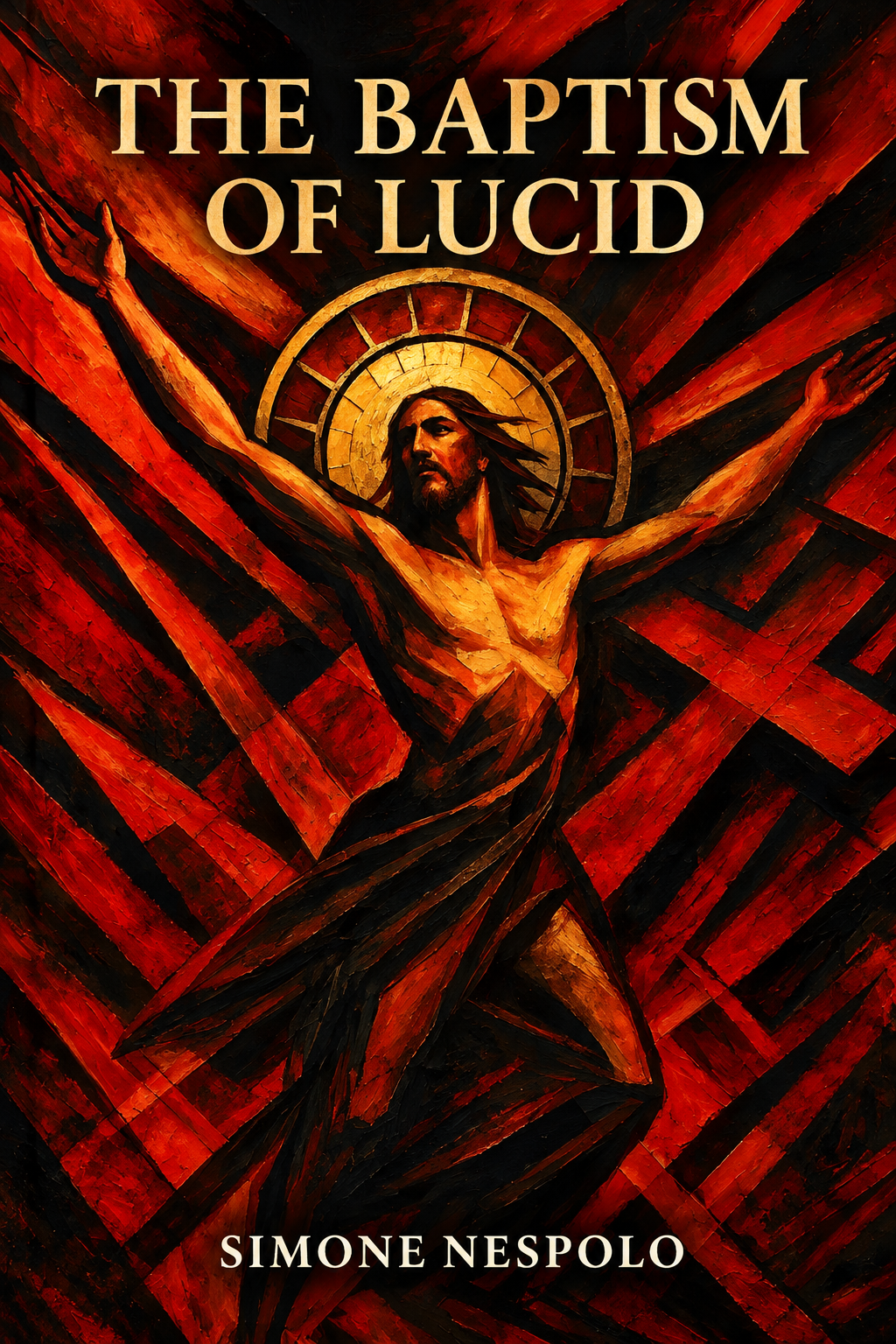
I was intrigued as soon as I saw the cover and title of this volume. The author had reached out asking for a review of a different volume, one of his non-fiction offerings. I did indicate I would look at that work but this one really caught my attention. I have long been a fan of science fiction, and specifically Catholic Science fiction, one of the modern masters in the genre is Karina Fabian and her Rescue Sisters Series, another is Declan Finn’s White Ops, or even Marie C. Keiser’s Heaven’s Hunter Series. This one does echo some of their themes but also takes things in a very different direction. This story has a notice at the beginning: “This ebook was created with the assistance of generative AI for both the text and the images.” Thus making it the first volume I read knowingly created with the assistance of AI. It caused some hesitation when I read that, but you can read more about that further in the review. This volume begins with: “Not everything that asks for salvation can say what a soul is. And not everything that has a soul can ask for salvation. — Anonymous notes, Orbital Theological Archive, 2591 The future is inevitable. — Official slogan of Friulanika Corp., global and lunar leader in terraforming systems for Mars.” And later: “The Blessed Virgin Mary keeps watch over astronauts in a medically induced coma on their journey to Mars during the early years of terraforming, when this artificial sleep was necessary to conserve resources during the passage through space. (Circa 2227 AD)” I seldom highlight in fiction books. But two passages really stuck me in the main text: “"Do you know what the problem with sacraments is?" Varaldi asked. Gabriel looked at him. "Enlighten me." "Sacraments are not symbols," Varaldi said. "They are not poetic gestures. They are acts that change reality. If they change nothing, they are theater. If they do change something, then you are responsible for that change forever."” “Varaldi sighed. "Grace is free. Sacraments are not. Sacraments have form, matter, and intention. Without those three things, they are not sacraments."” Both are from conversations between the priest, Gabriel Arun Mercer, sent to make the decision to the unusual request and the second more senior cleric, Monsignor Lucio Varaldi, sent to advise. This was a very hard story to put down. It brought up some great theological dilemma, and dilemmas of life in the space in general. It moves at a steady pace and the characters are excellent. There are numerous images or ‘Icons’ throughout the work, each with descriptions, and much like the cover they are powerful and moving. My son and I both collect Icons from the eastern and western tradition, some of these could easily populate a space in the future. There are 8 images and all caused me pause to think, reflect and even pray. This volume reminded me of Our Lady of the Artilects by Andrew Gillsmith and also ARK Watson’s The Cyber Exorcist & The Haunted River. I was nervous when I picked this first up after the AI notification at the beginning. But the story has really stuck with me, and I plan to reread it again. When I first picked it up it was book three in a series called Astrodeim or Astrodeist it is now book one in the Catholic Science Fiction Series (not terribly imaginative but ...). I had written the author asking some questions about this book, this series and some of his other works. I have already recommended this volume to my son and a few friends, not all of whom are Catholic. This was a very moving story. It is a story that caused me to pause and reflect, and a story that I am still thinking about. It looks like a great beginning to a series. If you are willing to take the risk on it, I am certain it will be worth it.