
Bowen Greenwood
Jul 26, 2026
Majestic world building, beautifully written
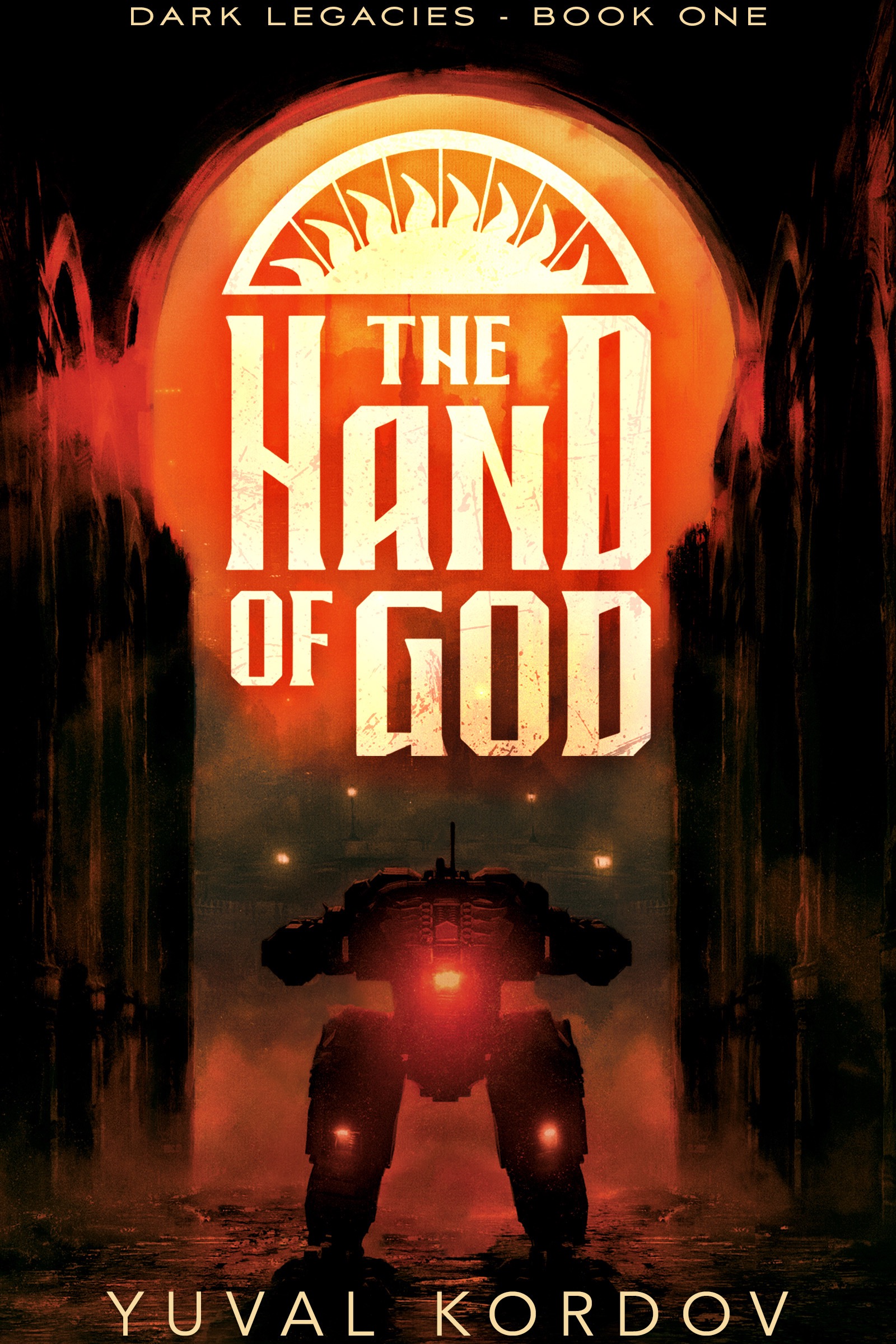
Read this if you take faith seriously, you aspire to greatness in your reading, you love a richly imagined post-apocalyptic world, you like strong female characters who are far, far more than Mary Sues, closer to Sarah Connor in T2 than to Rey. Don’t read this if you can’t stomach brutal suffering, you lack patience for worldbuilding, you need your action to be nonstop and immediate. The Details This isn’t going to be my usual review. The Hand of God deserves something more, something deeper, an intensely personal reaction to the author’s highbrow project. The book is too big, too majestic, for a few simple lines of praise (although that is what I’ll put on Amazon. As usual, people who read these posts get the real deal, Amazon gets the fluff). This review is from the heart in a way that I don’t usually express on the Internet. Gloomy, cerebral, heavy on world building and suffering, this is a book that requires to be taken seriously, and I harbor doubts that I am the reviewer to do it. I am an escapist reader—give me good guys fighting bad guys, lovers pursuing each other against impossible odds, the triumph of good over evil. The Hand of God offers something different, and probably greater. This is a novel of big themes, sweeping visions, and epic creativity. I suspect that my plebeian tastes are not up to the task. Its great strength is that it takes religion very seriously without sermonizing. Garden variety Christian fiction exists for the purpose of proving that leaving behind a life of sin for the saving work of the gospel yields a loving relationship with a good Christian. On the other hand, much of mainstream entertainment today exists for the purpose of of proving that self-righteous, hypocritical religious people oppress marginalized communities. The path between those bad extremes is a knife edge, hard to walk. The Hand of God does walk it, though. In it, religion is simply a fact, foundational to the life of individuals and communities, containing good people and bad. Religion is real here, in a way it isn’t in either the Christian fiction genre or in the mainstream tradpub world. (As a side-note, I want to give a shout out at this point to my friend Zena Dell Lowe, and her podcast The Storyteller’s Mission. Therein she rails against agenda-driven, sermonizing Christian fiction, and calls the faithful to tell stories that give life to our beliefs without simply preaching. I think Zena would appreciate this aspect of The Hand of God.) There is little to make one happy in the portions of the book dedicated to Esther or to the nation known as Cathedral. In them, we are treated to all the horrors of the apocalypse, unvarnished and brutal. (I hear some echoes of Mad Max: Fury Road in the Cathedral scenes) To illustrate how serious the book is, in most post-apocalyptic fiction I’ve read, the heroes have to go a few days without bathing. In the Hand of God, Esther, literally on the cusp of starving to death, can find no food except a mutated rabbit. She tries to choke its poison flesh down but vomits it back up. The end of civilization, like religion, is real in this book, not sanitized or polished. The Hand of God is beautifully written. The author’s command of the English language is superlative. I was reminded of my experience reading Stargun Messenger, in that the prose style itself recommends the book. (The two works couldn’t possibly be more different in their worldviews.) Yuval Kordov is, simply put, a highly skilled writer. Indie fiction has a reputation for typos and editing problems. The Hand of God will put that reputation to rest. (Except, it must be noted, a complete and total rebellion against the rule about ending sentences with prepositions. It drove me crazy every time I saw it, but it was so consistent I can only assume it’s an embrace of the modern notion that that rule isn’t real. Fie, I say!) To be brutally honest, I did not “enjoy” The Hand of God. Its characters, especially the female ones, suffer in horrifying ways, and it spends almost all its time on world building. It’s almost suspenseless. But as I plodded through the richly-imagined universe and the exquisitely described anguish, I recognized that I was in the presence of a book striving to be more, and higher, than I usually seek out in my entertainment. Interestingly, the cover promises mechs, AKA battle walkers, fighting machines that go about on two legs, like AT-AT walkers but bipeds. But mechs are actually a tiny portion of this book.