Author Interview with Dalton Wyers
By Spotlight Admin
Welcome, Dalton Wyers, to our author interviews!
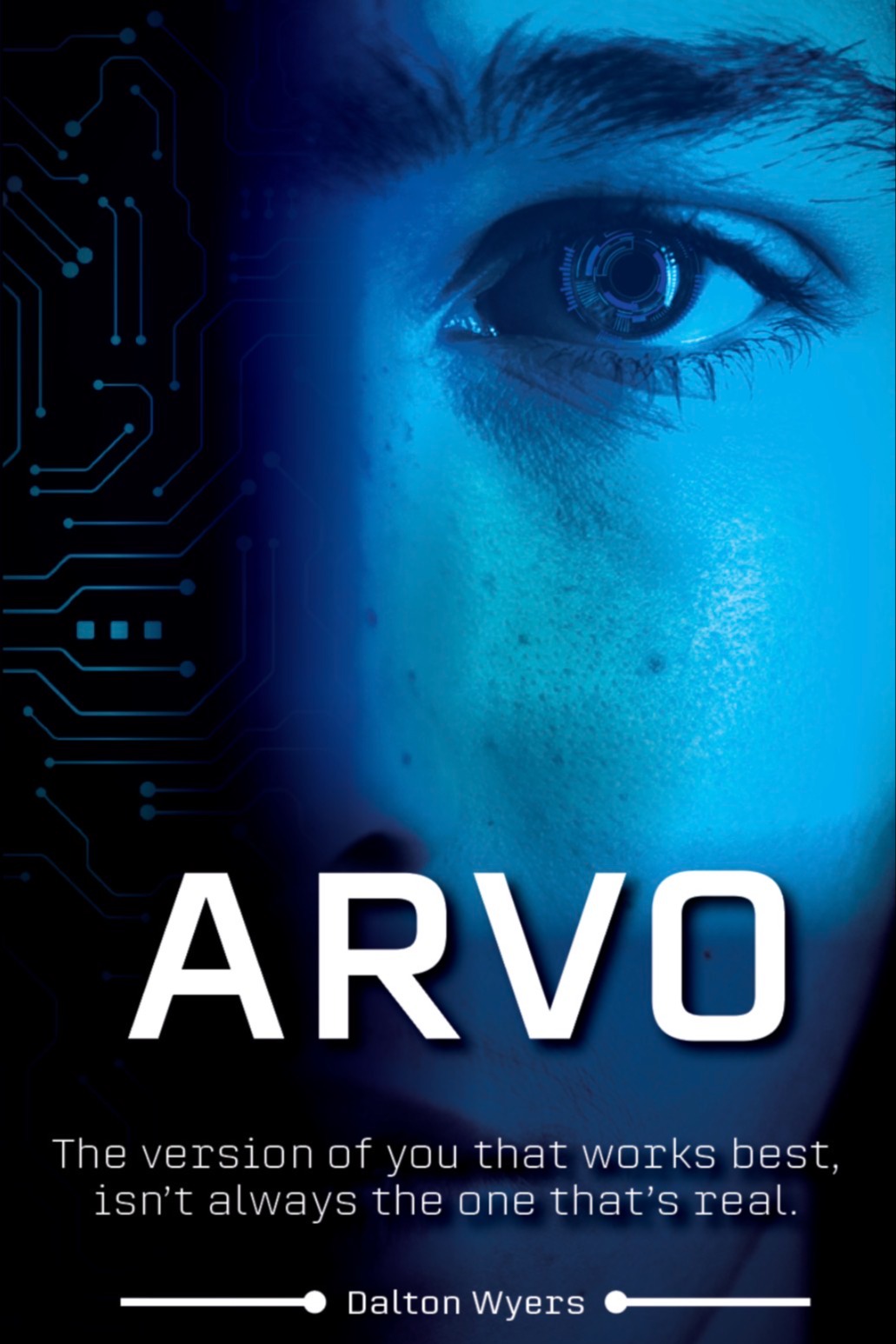
Dalton Wyers is an Oklahoma-born author, father of two, and lifelong reader raised on Brandon Sanderson and Christopher Paolini. Despite two master's degrees and a stack of certifications unrelated to fiction, he taught himself to write at thirty-one and finished his debut YA sci-fi novel, Arvo, in under a year, between a full-time job and his kids' sports schedules. Drawing on his own experience with ADHD and autism, Arvo explores selfhood, consent, and corporate control, and earned a spot on The Chicken House's Broken Binding Prize longlist. He's now writing a more mature fantasy. Off the page, he's a dad first and a Sooners season ticket holder second.
SPOTLIGHT: Please tell us something about yourself and your writing. Do you have any hobbies or experience that inspired or relate to your story?
Dalton: I do have a blog called The Mythmaker's Notebook. There are some old short stories on there from when I first started exploring writing, some book reviews from my time as a judge for IBOR, and a recent actual blog post about how Arvo came to be.
I've currently only got the one book published, Arvo. It's a self-insert of a kid from Oklahoma dealing with ADHD (and autism in my personal case, but not in the book). I go into quite a bit of detail in my blog post, but the gist of it is that I fell in love with The Broken Binding, and my autistic brain gets married to brands. Once I started taking ADHD medication and could actually sit for longer periods and write, I decided I wanted my book published by the Broken Binding. So, when they announced their sponsored prize through Chicken House, I set to work. I wrote the first draft in three months and uploaded the finished document in under six. I made the longlist, which falls short of my ultimate goal, but it was still so cool to see.
I'm currently working on an adult fantasy trilogy. I'm 75k words into book one, so I'm hoping to send the first draft off to my developmental editor in January.
SPOTLIGHT: What kinds of challenges have ADHD and autism presented in your writing and how have you adapted to deal with those?
Dalton: My brain won't be satisfied with writing for X amount of time or X amount of words per day. I do have those goals as well, but everything also has to be rounded out... a scene or chapter has to be finished before I can finish for the day. I attribute this to the autistic need for closure. I have kiddos, so sometimes I have to pause my writing when I go pick them up from school and cannot resume until they're in bed. There's an itch in the back of my head the entire time I am with them, wanting to finish the story. I try my best not to think about the story during family time, though. I've also had difficulty sitting for long periods of time. My mind will start taking the story in weird places if I sit and ponder too long, so I usually take a short break every couple of hours.
SPOTLIGHT: Now, let's dive into Arvo. I'm sure readers would like to know more about it. (I'll include a link to where they can find it on Spotlight on Indie at the end of the interview.) Don't leave anything out! Break down the details that you think would interest readers.
Dalton: Arvo is my debut novel!
Ethan, the main character, has struggled with ADHD his whole life. At thirteen, his doctor prescribes a neural implant to help him manage it. There is an AI voice in the implant, which he can speak to in his own head. The writing of the "internal dialogue" was challenging to put on the paper. I tried many different formats, but at the end of the day, stuck with keeping both Arvo's words and Ethan's thoughts in simple italics. Readers can tell which is which by word choice. The story starts after Ethan has had his implant for four years, at the halfway point of his senior year of high school.
Arvo is the title character: the voice in Ethan's head. He changes throughout the story, depending on what Ethan needs and what he asks for. The one thing that stays the same is his goal of helping Ethan... but is that the only thing he's programmed for?
Tyler is a very important supporting character. He is one of the few students in the school who does not have a neural implant, as they've become common in the four years since Ethan got his. Tyler's purpose in the story is to illustrate just how different life is when you refuse to adapt and use the "ear goblins," as Tyler would call the implants.
Daniel, Tyler's dad, is also a central figure. He works as a surgeon who performs the implantation of neural devices. He also sits on the ethics committee for Ora Corp, the company that manufactures the chips. He knows more about what goes on behind the scenes than anyone else... Will he do something about it?
Maya is Ethan's girlfriend. She plays several important roles, including keeping Ethan grounded and calm as he goes through the main issue in the story. Maya's mother also has Alzheimer's, and the story explores how the neural chips aid her mother's disease. Ethan also supports her throughout the story.
Ethan's parents both play pivotal roles in the story. His dad reads Ethan's moods off a tablet. His mom reads his face. Neither of them likes the way the other does things.
Murphy... I can't really say much about Murphy except... what can go wrong, will go wrong.
I did mention before that Ethan carries a lot of similarities to myself, so I chose my favorite place I've ever lived for the setting of this book... Oklahoma City. A very realistic version of a small OKC suburb, to be specific. I mention that Ethan is a fan of the Sooners many times, as am I. Scissortail Park is the setting for a very important scene later in the book. The story runs from January, when winter wants credit for trying without fully committing, to June, when OKC is basically hell.
There are a few themes explored in Arvo: Parenting in the age of AI/technology is a big one for me. Care vs surveillance ties into that.
At its core, Arvo is about authorship of self: who gets to decide who you are when a corporation thinks it knows better than you do, plus consent, and the blurred line between the technology itself and the institutions that end up weaponizing it.
There are physical, emotional, and ethical conflicts explored throughout the story, and the ethical ones hit the hardest.
SPOTLIGHT: Is there anything else that readers might want to know?
Dalton: I would love for readers to know that I wrote this for the ones who have ADHD and want to see it represented in a practical way. For the young adults whose parents gave them technology and called it "parenting." For anyone who wants to see the dangers of AI if it's left unchecked. I'd like to stress, the message of the story isn't "AI is bad" but more "be careful with AI... because you don't know who holds the leash." The novel was longlisted for the Broken Binding Prize by The Times/Chicken House.
SPOTLIGHT: How did you come up with the idea for neural implants with AI; what inspired the idea? Was it a specific current technology or one in development, another story (book, movie, game), or something else (or maybe a combination)?
Dalton: The idea came from me being a fan of smart home tech... being able to speak to Google Assistant or Siri and them responding from around the corner had me thinking "damn, I wish that was in my head," and thinking about how it would be possible.
SPOTLIGHT: Do you see this kind of technology being a real possibility based on current technology?
Dalton: I'm not sure if it's possible... obviously Musk has the neuralink but I'm not sure if it could connect to the auditory nerve or any other way to let us actually have a voice in our head.
SPOTLIGHT: Can AI like Arvo be trained by the user or is it completely set by the company that makes it?
Dalton: Arvo can be trained. Users can make requests, and Ethan does frequently in the book make references to the requests he's made.
SPOTLIGHT: Which of the conflicts of the story is or are the most important?
Dalton: On a personal level, the most important conflict is Ethan's relationship with his father. His father is rather disconnected, basically letting Arvo parent for him and correcting when he needs to. As a dad myself, it scares me to think that there are kids out there being treated this way with their iPads or something else. My kids do have access to tech, but it's limited and supervised. In the grand scheme, I think the most important conflict would be Ethan vs the hidden agenda. He knows why he got Arvo, and the purpose Arvo is supposed to serve. He isn't aware of Ora Corp's hidden actions.
SPOTLIGHT: What are some of the struggles that Ethan has to deal with (without giving away spoilers)?
Ethan has many struggles in the book, and his ADHD is definitely one of them. Arvo has helped tone it down, but he still has his moments. He struggles with realizing how dependent his friends are on their implants, and if there's anything he can do to change it. He's kind of forced into action when he is enrolled in the upgrade program called Sentinel against his will. His struggles expound a lot at that point, to dealing with his best friend when they don't see eye to eye, his girlfriend agreeing with him but unable/unwilling to help, and his mom and dad being on completely different pages. It's quite a bit for a 17-year-old to deal with.
SPOTLIGHT: Now that we understand a bit more about Arvo, tell us a little more about your publishing journey of Arvo from beginning to publication. It's always interesting to learn how authors find their way into holding their published book in their hands, either in paper or on an e-reader.
Dalton: Arvo started as an idea when I learned of the Broken Binding Prize and my first instinct was to go ask an AI more about it. I didn't go to Google, like most people do (or did?). I went to ChatGPT. It clicked into my head that I had become dependent on the AI to find all the answers for me, rather than doing it myself. So while I was reading about a competition I would love to enter, the idea for it fell into my head. I began the first draft in early January and finished it in March. I sent it off to a developmental editor who did a WONDERFUL job, and got the notes back in mid-April. I submitted my finalized draft for the competition just before the deadline of June 1. I spent the summer querying agents, but I pivoted to self-publishing when I found out that I made the longlist for the Broken Binding Prize. I put the book on Amazon, and ordered author copies for my direct sales site. I learned that, while being longlisted might open some doors, it doesn't fill digital shopping carts. So, while Arvo is currently available in self-published format, I have returned to querying agents.
SPOTLIGHT: What process do you follow for your writing? Do you do anything formal like outlining, special software, or just pantsing?
Dalton: I find myself being both a plotter and a pantser. For both Arvo and my current WIP, I created an extensive outline of everything that I wanted to happen. Most of the items in the outline focus around the plot, with a few character-building details scattered in there.
When I get into the meat of the writing, I tend to find myself going on tangents away from the outline, thanks to my ADHD. To combat this, I always have my outline pulled up on a second monitor, keeping an eye on where I'm supposed to go. Most of the tangents turn into good character development pieces, so I let them happen, and then guide the story back to where the outline wants me to go. Essentially, the outline keeps me on the road and my ever-couple-hours breaks keep me from driving off a cliff.
I use Dabble to write, as it gives me everything I need. Visual word count in both digits and graph format, how many days until my goal, and being able to drag and drop scenes are all important to me.
SPOTLIGHT: With such a busy schedule, I imagine you maximized your writing time. How are do you organize your writing sessions?
Dalton: I currently work four days per week, Friday-Monday. I write on my days off (Tuesday through Thursday) while the kids are in school. So, absolute best case, it's twenty-four hours per week. However, those are also the days I handle taking my kiddos to their appointments, do grocery shopping, and all other errands, so it's usually significantly less than that.
My goal is about 6k words per week. I try to get on my computer on Monday nights and skim over everything I wrote the week before, and then write one-sentence summaries for the next few chapters I'll be tackling that week. This way, after I drop the kids at school, I can just sit and write rather than needing to analyze first.
SPOTLIGHT: Since this is your debut and you're publishing is so new, what have you learned that might help other writers just getting started?
Dalton: Oh man, I've learned a lot, but the biggest one would be... start early. Start posting on social media and building an audience several months before release. I failed to do that, and my launch fell pretty flat.
A second one is to hire a developmental editor, at the very least. I can recommend a great one, she completely changed how I saw my story and helped me make the book much better after that first draft.
And finally, stay away from AI. Don't even use it for covers, it will tarnish any credibility you have. I didn't learn this from experience (I can also recommend a cover artist local to me!), but I've seen the reactions.
Thank you, Dalton, for this great peek into your background and your debut novel, ARVO!
Readers can find more about Arvo at spotlightonindie.com/books/arvo. You can click the author's name on the book listing to find his profile with links on Spotlight on Indie or visit him directly at any of the following social media profiles:
X and Instagram: @LyveWyers
Facebook page: https://www.facebook.com/share/1F5gY8RgcJ/?mibextid=wwXIfr