Author Interview with Anamarija Mraz aka Mary-Anne Frost
By Spotlight Admin
Welcome Anamarija to our Spotlight author interviews!
SPOTLIGHT: To start out, please introduce yourself to the readers…
ANAMARIJA: My name is Anamarija Mraz and I write under the pen name of Mary-Anne Frost. I write fairytale-fantasy books rooted in Slavic mythology and modern Australian folklore. I live in Western Australia, but I was born in a small-town in Croatia famous for fairytales written by Ivana Brlic Mazuranic. My maternal grandmothers were oral storytellers, and they told me Slavic fairytales before bedtime, which is how my love for writing started. My stories are lyrical and highly emotional, and I draw influence from the works of Naomi Novik and Katherine Arden. When I don’t write, I like to walk in nature, bake sweets and spend time with my cat Felix. My favourite fairytale of all times is Sleeping Beauty, and I never get tired of re-watching Disney movies/cartoons!
SPOTLIGHT: Tell us about your writing and anything else you'd like to share with readers…
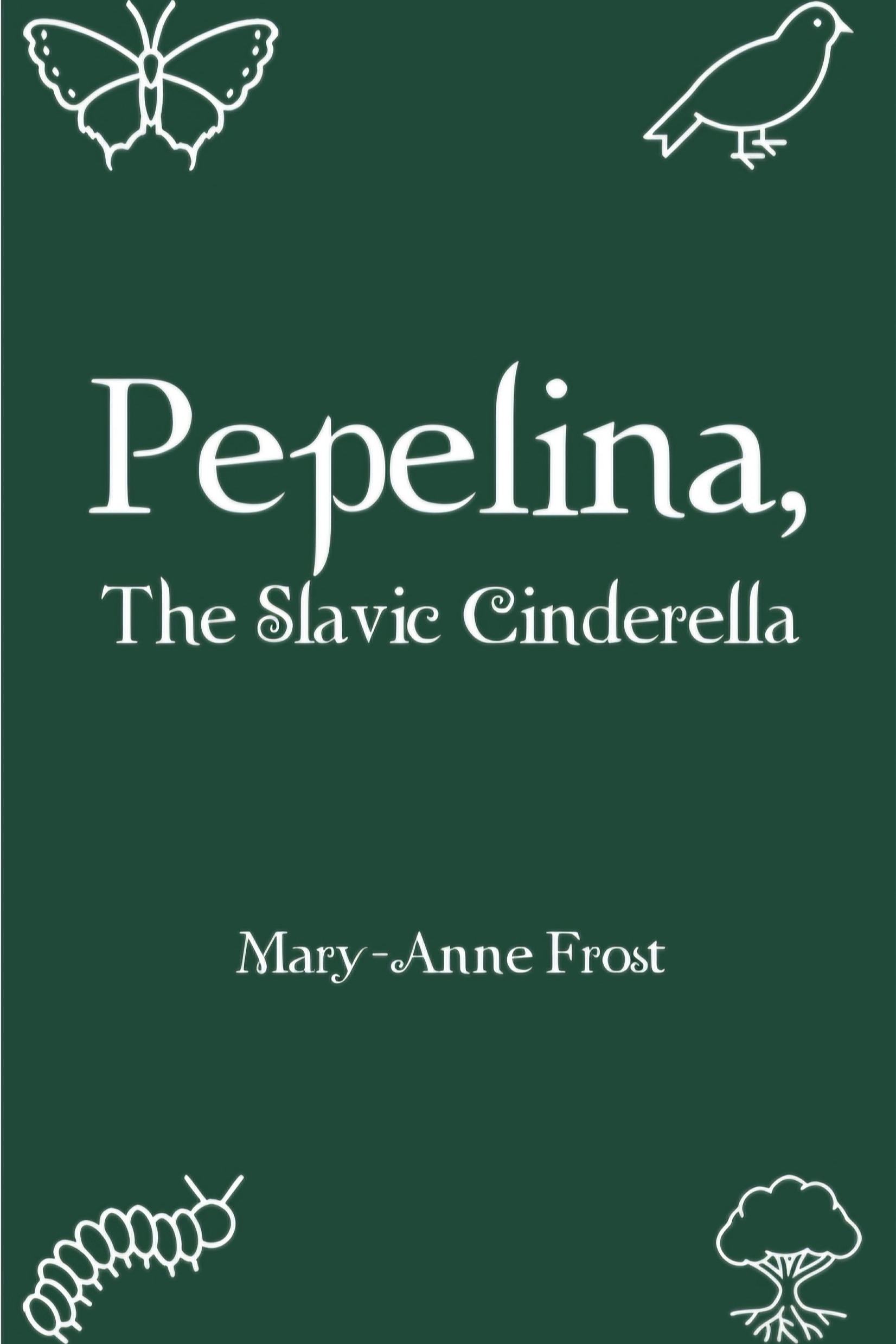
ANAMARIJA: For my debut book, Pepelina, The Slavic Cinderella, my father’s death inspired me to use Cinderella to channel my own feelings of grief and loss and explore the untold relationship between Cinderella and her father.
Protagonists – Pepelina. A creative and sensitive Cinderella seeking authorship and not marriage in a world where stories are controlled and manipulated for power .
Main story conflict – silence/voice, grief/healing.
Setting – Slavic inspired world with traditional folk elements. Melancholic with wintery atmosphere.
Themes – grief is a big one, but there are also feminist empowerment, ancestral healing, creativity, resilience and silence.
Creative Health and Wellbeing as a Debut Author… I just find that debut authors do not speak about this often and I am learning self-care is super important.
SPOTLIGHT: Many people—myself included—are probably not familiar with Slavic folklore. Can you tell us something about that, especially those elements that have inspired your writing?
ANAMARIJA: Fantastic question! My biggest focus was using traditional Slavic food like cabbage rolls as a metaphor for main heroine’s creative starvation and hunger in her household which ties in with her goal of publishing a book. My favourite element of all was creating Bilo, a form of ancestral magic and that was inspired by the books I read on Slavic magic. I also included mythological creatures like the famous Baba Jaga/Yaga, story of Zhar ptitsa (firebird), God Weles/Velez and household spirits like Domovoi, Dvorovoi, and Banik. I’d like to also mention that for a better reading experience, my novel contains a short glossary explaining the most important creatures from Slavic mythology and other cultural terms in few sentences.
But since I have an opportunity to speak a bit more about my book here, I would like to help readers unfamiliar with Slavic folklore to meet and understand some interesting mythological creatures that feature in my novel.
Baba Jaga/Yaga – In Slavic folklore, Baba Yaga or Jaga is usually a contrasting female figure, sometimes a witch and sometimes a helper to the hero or heroine. Often, Baba Yaga is portrayed as an ugly and scary looking old woman who eats children while in other stories she is benevolent and kind.
Baba Yaga lives in a wild forest, often in a hut of with chicken legs. Her chicken legged hut is usually surrounded with a fence made of skulls and bones of her victims. Baba Yaga is a very solitary figure and can be seen flying around the forest in a wooden mortar, wielding her pestle.
In many Slavic languages, Baba means ‘grandmother’ or ‘old woman.’ As a very ambiguous figure, Baba Yaga has many faces. Sometimes she is seen as archetypal image, Earth Goddess, Cloud, Death, Moon, Bird, matriarchal ancestress, Winter. Baba Yaga is a hero in many Russian folktales. One of the most famous folktales that features Baba Yaga is the Russian fairytale and story of Vasilisa the Beautiful.
Vasilisa the Beautiful is often seen as Slavic or Russian Cinderella. In the story, Baba Yaga helps Vasilisa escape stepmother’s cruelty. Vasilisa inherits a doll from her mother, and so when she is sent to fetch fire from Baba Yaga, doll guides her to a set of tasks that must be completed. As Vasilisa completes the tasks, Baba Yaga grants her a skull lantern filled with glowing embers. With the help of glowing embers, Vasilisa lights the fire in her home, which becomes the tragic end of her stepmother and stepdaughters.
I incorporated Baba Yaga in Pepelina, The Slavic Cinderella, as she is often the most prominent figure in Slavic mythology who is connected to transformation, and the heart of the classic Cinderella story is transformation. I thought it was very appropriate to bring Baba Yaga’s many faces into light by making her a shapeshifter. In Pepelina, Baba Yaga has two shapes – she first appears in the novel having an animal shape then shapeshifts into a human shape. And Baba Yaga’s human shape is also interesting as when she first appears in my novel, she is depicted as both young and old woman. By choosing this, I wanted to highlight the aspect of divine femininity.
Even though Baba Yaga’s role in Pepelina is not as prominent as perhaps in the story of Vasilisa the Beautiful, and Pepelina does not endure difficult tasks to obtain a gift from Baba Yaga, Baba Yaga’s magical ‘gift’ in my novel can be seen as both a blessing and a curse.
Zhar ptitsa – In Slavic folklore and mythology, firebird is a magical bird full of glowing or burning feathers (plumage that emits orange, red, yellow, golden light). Firebird is a contrasting creature, because sometimes it brings blessing to whoever captures it, and other times it becomes a curse and brings doom to its captor. Russian fairytales sometimes describe Zhar ptitsa as having beautiful golden feathers, and eyes like crystals. If removed, one large feather of firebird can light up the whole room (that is how powerful it is). Other stories depict firebird as a small falcon with a plumage the colour of fire and eyes that glow. Firebird in fairy tales serves one role – object of a difficult quest. There are many versions of the firebird tale but usually it begins with the order of the king or ruler to find or capture the magical bird in a faraway dangerous land. In some versions, the quest is about capturing the bird alive while in others it is to retrieve a magical feather.
I included Zhar ptitsa in Pepelina, The Slavic Cinderella not to have the main heroine claim some special object (golden feather) at the end of her quest of capturing the firebird. Instead, the main heroine searches Zhar ptitsa to obtain secret truths about her identity, ancestry and growing ancestral magic. Though there are some magical, glowing feathers of Zhar ptitsa in the novel, Zhar ptitsa holds a special meaning for the main heroine as it serves as a parallel of Cinderella/Pepelina’s transformation from ashes into a princess/storyteller. Firebird dies in its own flames and is reborn in its ashes, which I use to explain Pepelina’s writerly transformation, she is a heroine who ‘dies’ in the flames of her servant self, and, with the help and guidance of Zhar ptitsa, is reborn as the storyteller and writer she was always meant to be.
Slavic God Weles/Velez – sometimes also known as Veles or Volos, is Slavic god of the underworld. He rules the realm of the dead and guards the boundary between the living and the dead. Velez is related to floodplains, so he is often seen as protector of cattle and livestock. He symbolizes wealth that comes in rural, agrarian societies and oversees commerce and trade. Velez is also seen as god of magic, knowledge, arts, poetry and divination. This makes him a patron of poets, healers, storytellers and wisdom.
Velez, like Baba Yaga, has multiple forms or faces. As a shapeshifter, he can appear as human, serpent, cloud, tree, dragon, serpent, bear or wolf. Sometimes as human he will have bull horns, scales or even wings. Velez’s many forms symbolize his connection to wilderness, animals, and subterranean forces. Some stories connect Velez to agriculture, fertility, and the cycles of nature.
There are few myths involving Velez, but the most famous one involving Velez is his eternal struggle with Perun, the god of sky, thunder, and war. In the myth, Veles descends from the underworld to steal cattle or fertility, and Perun chases him with lightning. The story presents the importance and balance of natural forces, with Velez symbolizing darkness, winter and secret life while Perun represents light, summer, and visible actions.
Velez was worshipped widely, across many Slavic lands, particularly among farmers, merchants and herders who left sacrifices to ensure fertility of livestock, bountiful harvests and successful trade. Velez was greatly honoured in harvest rituals and invoked in prayers for protection and guidance. Though a complex deity, Veles is a bridge between the world of the living and the dead, the material and the mystical. As the god who rules wealth, magic, underworld and cattle, he represents transformation, wisdom and the cyclical nature of life. Velez’s presence in Slavic folklore emphasizes him as guardian of not only spiritual but also earthly realm.
I incorporated Velez in Pepelina, The Slavic Cinderella, primarily as he is the god of storytellers, healers, and poets and the main heroine is a storyteller. None of the characters in the book have an encounter with Velez, but his presence is felt in the worldbuilding of the novel that crosses from the world of the living into the world of the dead.
Another aspect of Velez that I wove into the novel is the winter setting. Most of the time, there is snow, persistent cold, frost and ice in the novel signalling presence of Veles in kingdom of Vineta. Though Veles makes no physical presence in the novel, his influence, particularly around the ancestral magic, is strongly felt as the story of Pepelina unravels. My novel also makes an interesting connection between Velez and his magic, and Baba Yaga and her magic, tying the two together. Another aspect of Veles that is explored in the book is trade, particularly around the work that Pepelina’s father does.
Domovoi – In the Slavic religious traditions, Domovoy is a household spirit of the given kin. Domovoy is the personification of the god Rod (supreme deity in Slavic mythology). Sometimes Domovoi has a female counterpart (a wife or partner) called Domania, the goddess of the household. Most of the time, Domovoy is a single god.
The term Domovoy comes from the Indo-European root *dom which is shared by many words in the semantic field for “house”. Domovoi’s task is to protect the well-being of kin in any of its aspects. Their care is specially focused on children and the animals in the house. If something is threatening the welfare of the kin in the house, like plague, illness, death of someone in the household or war, Domovoi can give a warning. If someone in the household uses bad language, or acts dangerously towards someone else, Domovoi can show its angry side and sometimes leave the household leaving the kin unprotected.
Domovoi is usually represented as old man, with a long grey beard and flashing eyes. In some descriptions he has a tail and horns. Domovoi also has many animal forms. Some of his favourites are cats, dogs, bears and snakes but he can also appear as the departed ancestor of the given family.
Household gods were represented by the Slavs as statuettes, made of clay or stone, which were placed in niches near the house's door, and later on the mantelpieces above the ovens. Some of the offerings for Domovoi included leftovers of the evening meals, and slices of bread with salt wrapped in white cloth and offered in a hall. Sacrifices and offerings to Domovoi were particularly important when a family would move into a newly built house.
I included Domovoi in Pepelina, The Slavic Cinderella, primarily for his guardian role in the household. He is a person who ensures wellbeing of Pepelina, her mother and father because the family treats him with care and respect. Domovoi appears to Pepelina early in the novel both in his animal and human shape. This choice was deliberate as I wanted to highlight Pepelina’s special bond with animals early in the novel. Lastly, I think the most important reason why I connected Domovoi to a Cinderella story is that the heart of the house in most Slavic household is the hearth. Hearth or fireplace is a favourite place for Domovoi to sleep around, and Pepelina is often found sleeping exhausted by the fireplace with ashes covering her face and body. The presence of Domovoi is mostly soothing and caring. He acts like a friend and companion to Pepelina but he does play a bigger role along other Slavic household spirits later in the novel.
Dvorovoi is a Slavic spirit of the courtyard. He is closely related to stables, cattle sheds and farmstead grounds. He takes his name from the yard. Dvor is the farmstead ground, a space, often fenced that has byre, stable and midden. Dvorovoi lives among cattle rather than behind the stove or around the fireplace with family.
In Russian traditions, Dvorovoi is called the younger brother of Domovoi. Dvorovoi is like Domovoi, a household spirit that can be benevolent or malevolent. Dvorovoi is often thought as more dangerous than Domovoi, easy to anger and will harm livestock and animals white white fur if disrespected. Dvorovoi is similar in appearance to Domovoi. He is shaped like a small man and covered in lots of hair. When Dvorovoi was happy with the work in the yard, he was very helping and would comb a horse’s mane and plait into small braids and would haul water. If Dvorovoi was angry, he would take away horse’s food and put dung in trough instead. Some of the offerings for Dvorovoi included wool, bread and coloured rags.
I incorporated Dvorovoi in Pepelina, The Slavic Cinderella, as a friendly companion who helps Pepelina with her everyday outdoor chores. Dvorovoi, Domovoi and the rest of the household spirits who live in Pepelina’s household are not only companions, and witnesses to what is happening in the house and yard but also happily act if stepmother and stepsisters treat Pepelina too harshly.
Banik – is a bathhouse (banya) spirit in Slavic mythology. For the readers who are unfamiliar with banya, it is a traditional Russian steam bath that utilizes a wood stove (very much like what nowadays we know as sauna). Banya is important part of Russian culture, and is typically found in a small room or building where steam and high heat cause sweating. Banya can also refer to a public bathhouse.
Going back to Banik, he is shown as small, naked old man, sometimes covered with birch leaves left over from bath brooms. Like Domovoi, Banik is also a shapeshifter. He can appear as local person, coal or stone in the oven that heats the bathhouse. If Banik is disturbed by an intruder while washing, the banik will pour boiling water over him or could strangle him. To keep Banik happy, people left him offerings of fir branches, water, and soap followed by a thank you said out loud. If something went wrong in the bathhouse, like fire, it was believed that Banik was offended in some way. Most births among Slavic peasants occurred in banya, and if they did not, banik was not happy or settled until the child was born in his space.
I incorporated Banik in Pepelina The Slavic Cinderella as a helping hand who assists Pepelina with cleaning and keeping the banya tidy. Like Dvorovoi, Domovoi and the rest of the household spirits, Banik often plays the role of comedic relief in my novel.
SPOTLIGHT: That is very interesting and certainly makes your version of Cinderella unique. What other folklore inspires you, if any, and can you be specific about what that is for readers to understand?
ANAMARIJA: Unfortunately, I cannot mention every world mythology I love here because this would be a long answer, but my absolute favourite is the Egyptian mythology. I love stories of cat-headed goddess Bastet/Sekhmet and Thoth, the ibis-headed god of wisdom, science and writing. I return to the story of Thoth as he represents fascinating dualities like magic and logic, science and creativity, and opposing forces, good and evil, are pillars of fantasy writing. Story of Bastet and Sekhmet is very important to me as it represents the dual nature of women, one fierce and one soft, which is the kind of heroines I aspire to write.
SPOTLIGHT: Could you describe anything else that makes your Cinderella re-imaginings different from what we know of the classic tale?
ANAMARIJA: I approached writing Pepelina hoping to explore Cinderella’s relationship with her father because I felt such an important relationship was left unexplored in other retellings and adaptations. What makes Pepelina different from the classic tale is that it expands on the idea of Cinderella’s transformation from a servant girl to princess, turning her from a creative, grieving heroine into a storyteller with a voice, and a writer she was always meant to be.
SPOTLIGHT: I'm guessing that Cinderella is your favorite Disney movie, but I'd love to know what other movies you enjoy.
ANAMARIJA: You are close to guessing. Cinderella is my mother’s favourite Disney movie. As to my favourite movies, I am a big fan of Star Wars movies (episode I – III). Anakin’s story has a special place in my heart since I love tragic villain arcs. I also admire Padme Amidala’s kind heart and fierceness. In the world of fantasy, I love Lord of the Rings and Hobbit movies, particularly the wisdom and grace of the elves like Legolas, Arwen and Thranduil.
SPOTLIGHT: What are your favorite books or what do you enjoy reading in your free time?
ANAMARIJA: I read outside the fairytale-fantasy genre that I write in. I don’t have a favourite author or book. In fantasy genre I admire the work of Katherine Arden, Naomi Novik and Andrzej Sapkowski, but I also have huge love for classics like Dostoevsky, Bram Stoker, Charlotte Bronte and Shakespeare. Currently, I am reading Lewis Carroll’s Alice’s Adventures in Wonderland and Through the Looking Glass.
SPOTLIGHT: How long have you been writing? Publishing? You mentioned other stories. Did you write anything before Pepelina?
ANAMARIJA: I wrote poetry as a teenager in my native language, but I started writing prose in English after I migrated to Australia. I published poems in a student magazine when I studied English and History at university and discovered my love for short stories after graduation. Some of my short stories which I call fairy-crosslets are posted on my website, a fun reads with rhyme suitable for both adults and children.
SPOTLIGHT: Everyone's story is similar but unique in many ways. What's your journey from beginning writing to seeing the finished book published and even after publishing?
ANAMARIJA: I am a very ‘unconscious writer’ which means most of my writing happens off the page first. My first draft is usually ‘vomit’ and I think of it as me telling myself the story. Then, I go to the ‘incubation’ and I leave the draft alone for as long as I can. When the story has ‘incubated’ for some time, I start editing, usually big structural edits first and then finishing off with line editing. After publishing, I see my prose as rooted and grounded in oral storytelling. It means my books are not modern, cinematic ‘show not tell’ prose but rather ‘paper/printed voice’ like the Victorian literature that I admire.
SPOTLIGHT: What inspired you to start writing?
ANAMARIJA: I am a very big dreamer, and I love getting lost in imaginative, fantasy worlds! My love for writing began with worldbuilding. When I was a child my brother Darko and I created our fictional world. While my brother drew, he asked me to create characters and stories for our world. That sense of child-like wonder and fictional creation stayed with me and keeps me coming back to writing. I love the ability to turn ordinary things and events into something extraordinary. A bit like a story alchemist, I guess.
SPOTLIGHT: What has been the biggest surprise after publishing your first book?
ANAMARIJA: I know this is not very specific, but my biggest surprise is learning how to market myself as highly sensitive and introverted writer. I still shy away from the loud marketing strategies, like Book Tok and massive social media presence. I prefer to ‘quietly’ market and build my confidence. Doing this written interview is part of the ‘quiet marketing’.
SPOTLIGHT: Have you published any other books since Pepelina?
ANAMARIJA: I have not published any other books since Pepelina, but I am currently working on my second book in Cinderella Fairy-Cross Series.
SPOTLIGHT: What do you have planned upcoming?
ANAMARIJA: My second novel will be book 2 in Cinderella Fairy-Cross Series. It is an Australian retelling of Cinderella for adults. I am blessed to live in the state of Western Australia, famous for the wildflower blooms that are seen from the sky in spring. Naturally, my many outdoor walks and hours spent looking at flowers inspired me to create a fictional world populated with bush fairies and wildflowers.
SPOTLIGHT: What would you advise other new authors?
ANAMARIJA: My advice to new authors would be to write for yourself first. Write what inspires and excites you and do not fall in the trap of following trends.
Thank you, Anamarija for sharing these insights into your writing!
People can find out more about Anamarija Mraz on her profile here at spotlightonindie.com/authors/mary-anne-frost and her website at www.maryannefrostauthor.com.
She also has a blog at maryannefrostauthor.com/blog/. On her blog, she shares short stories called fairy crosslets, which she refers to as "fun, and quick reads appropriate for both adults and children". They feature animals and ordinary objects.
She can be found on X as MaryAnneFrostAU.