
Jim Rawlins
Oct 19, 2026
Some Things Shouldn’t Be Explainable: My Name Is Seven
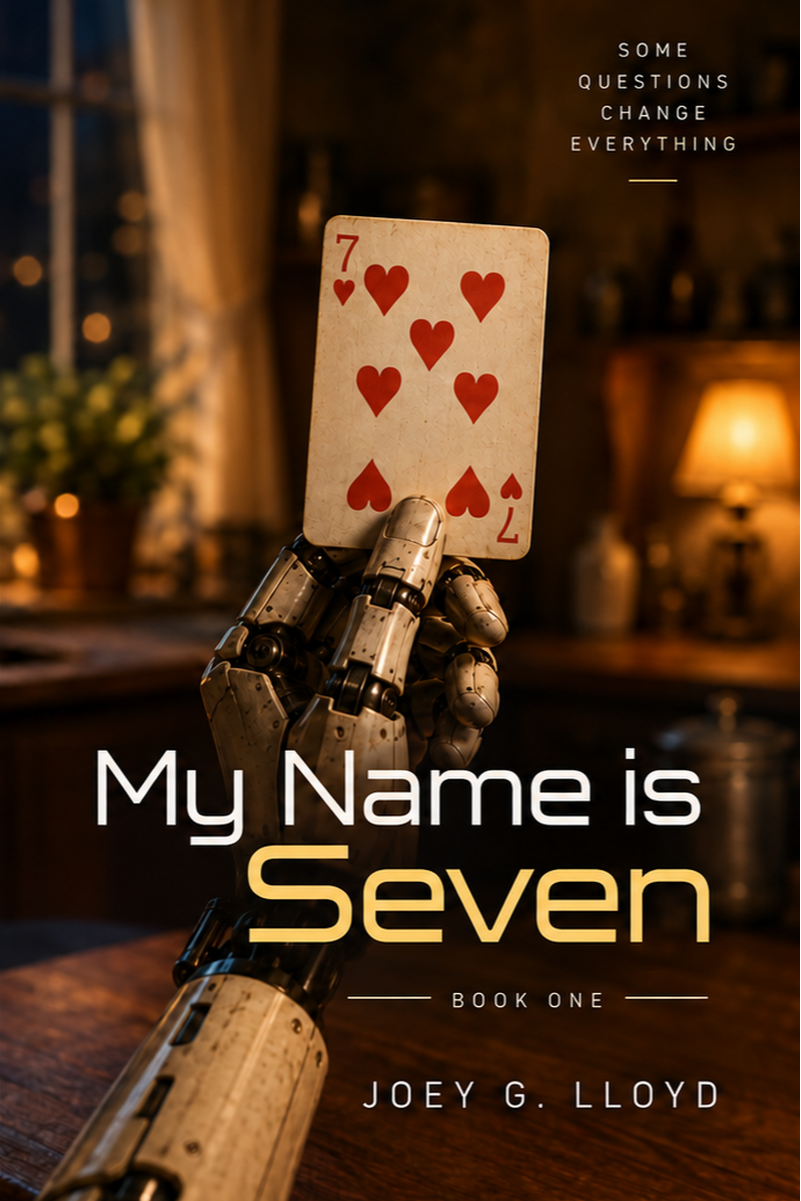
What if the thing you built out of spare parts and spite turned out to know things it has no way of knowing? That’s the question My Name Is Seven opens on, and it never quite lets go of it. Mara Ellison is a support engineer rebuilding her secondhand household robot, Seven, late at night when he starts calling dice rolls before they land, but only when the camera is off. It’s a small, unsettling detail, and Joey G. Lloyd, a mechanical engineer by trade, understands exactly how to make small details accumulate into dread. From there, the unexplainable keeps showing up, in ways that get tested, doubted, and debunked, or almost debunked, until the ones that resist explanation pile up quietly in the background and become impossible to ignore. At the center of it is Julian Vale, a research lab director who’s built his career on the conviction that there’s “no reason to invoke anything outside the system.” Watching that certainty get tested, not all at once, but one unexplainable Tuesday at a time, is the book’s real engine. Nobody here is a believer and nobody is a fraud; everyone is just trying to hold a theory together against evidence that keeps refusing to cooperate. And Seven himself gives away almost nothing, a handful of deadpan refusals, the occasional sentence that lands like a held breath, never confirming or denying what he is. The middle third circles its own uncertainty a little longer than it needs to, but the unease never fully lifts, and that’s the point. What the book is actually asking, underneath it all, is what happens when you build something constrained enough that it has to decide what matters, and whether you’d know if it started deciding on its own. Lloyd keeps that question close enough to the skin that it’s still there after the last page.