Dan Hogan
Nov 3, 2026
When Our Robot Children Become Their Parents...
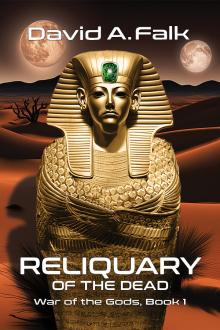
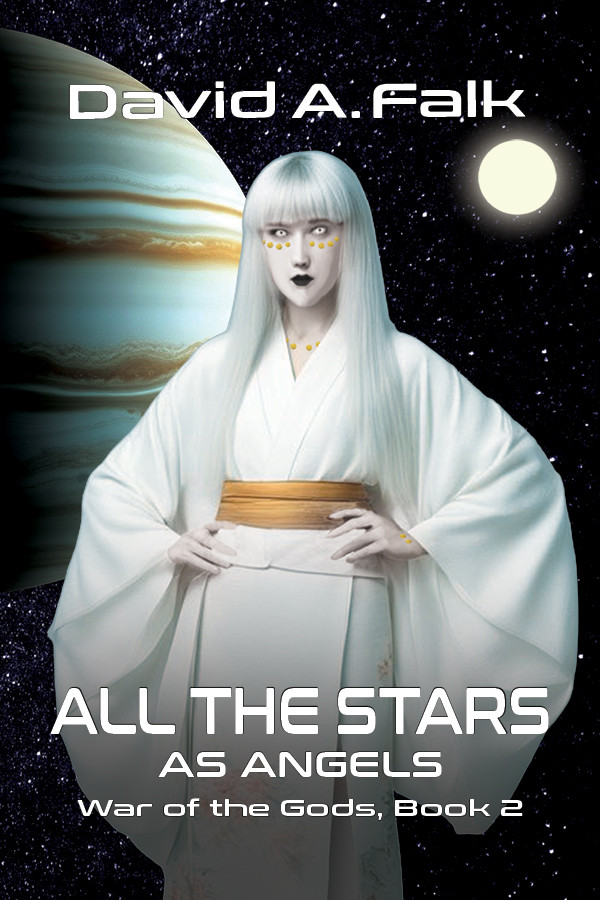
I was a fan of Falk's first installment of this series, Reliquary of the Dead, which ended on a cliffhanger, so I was eager to read the second volume. While the first volume was more like Indiana Jones meets the Martian, this one is much more Blade Runner, focusing on a city-sized spaceship filled with a complex mechanical society. Things that worked for me - - The overall question that Falk raises re: AI and identity is fascinating. "What makes something alive?" is a well-trodden path in sci-fi, but I thought Falk brought some fantastic new insights to it. Without giving too much away, the fact that the mechanicals have, in many ways, re-created elements of hierarchical bronze-age societies was a fresh take on the age-old question. - The fact that the mechanicals, the more they advance and evolve, seem more and more likely to repeat the same mistakes as the humans that built them, is a fascinating theme that is engagingly executed throughout the book. - Both returning and new characters were very enjoyable, even with side characters like Maat the pet terraforming scatter bug, or Sloppi, Pierre's enthusiastic but hopeless personal chef robot being very engaging. - A critique I had of the first book was that Pierre sort of "solves" the central puzzle off-screen and it wasn't as enjoyable to me as a reader. This is fixed in this book, where Pierre solves puzzles in real-time, but the audience is not always in his POV when he does it. So are able to see the same data Pierre does, and then we are let into how he solved puzzles later. I felt much more like a participant in the puzzle-solving. Things that didn't quite work for me - - I listened to the audio version of the first novel, whereas I read this installment. In reading the novel, I noticed a significant number of grammatical and typographical errors (i.e. spelling the name of Charles Dickens as "Dicken's" on page 2). There were also issues with comma placement and inconsistent capitalization. I am aware this is an indie-published series, but it needed more careful copy editing. - I would have appreciated a tighter third-person limited POV style. Sometimes it was a little difficult to tell whose head I was seeing events from (usually Niva or Pierre) and this was complicated by the fact that it seemed inconsistent when Niva or other mechanicals used earth metaphors, descriptions, comparisons, or slang. Immersion was broken for me, somewhat, and I wished the mechanicals and Pierre had more distinct writing styles in their POVs. - There is a human subplot that is resolved early in the novel that felt a bit rushed, especially considering the gravity of the situation (serious crimes involving consent, betrayal, etc.). I feel like this subplot needed a bit more room to breathe, and I didn't quite understand all of the motivations of the characters. Furthermore, the human characters also seemed a little too quick to forgive in this situation. I didn't quite buy the resolution to this plotline.