Dan Hogan
Nov 3, 2026
Most Engaging Therapy Patient Since Tony Soprano--But in Space!
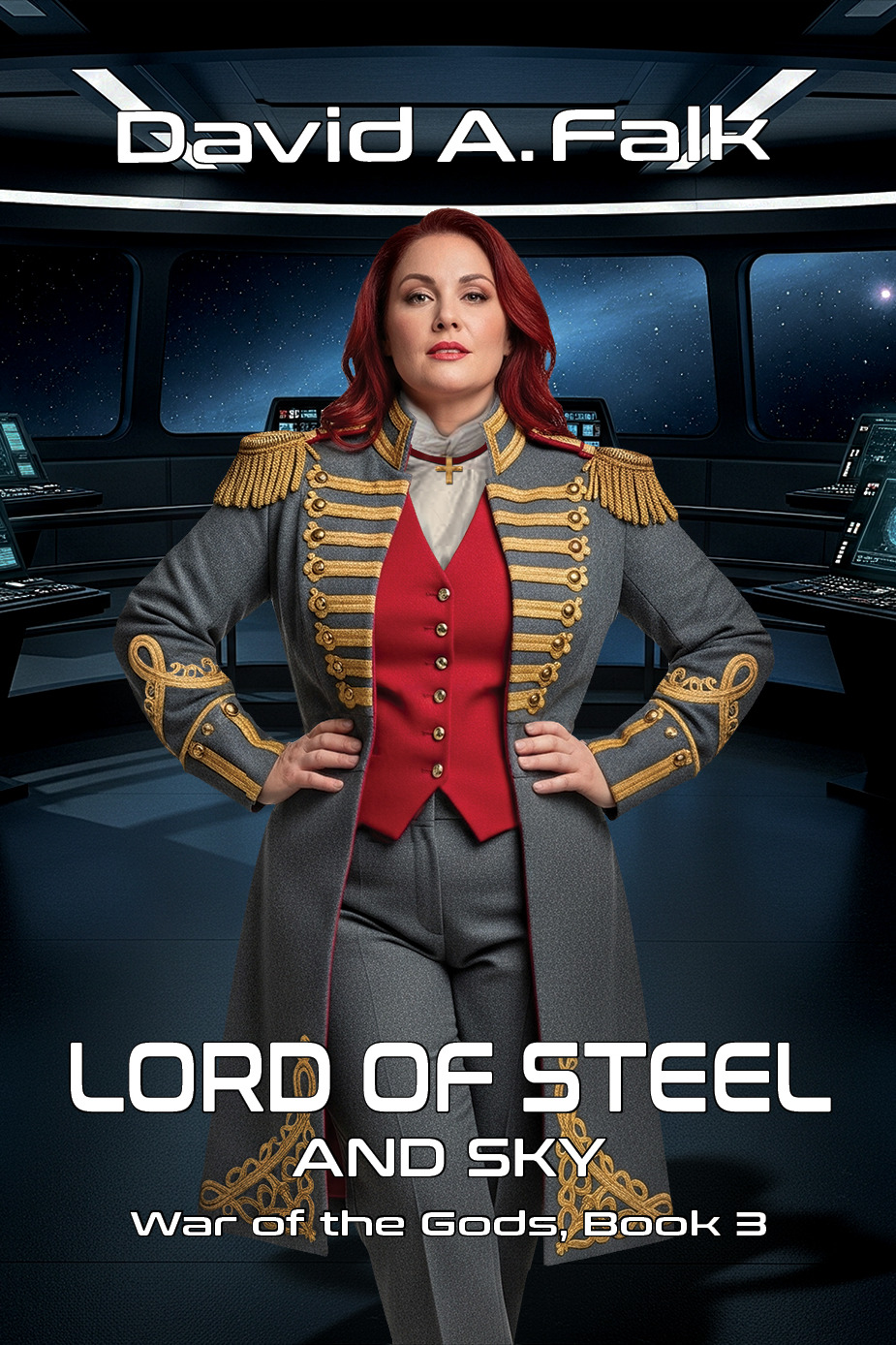
Having just finished Book 2 of this series, I immediately moved onto Book 3 Things that worked for me - - Falk was able to successfully switch up the main cast and keep me invested. This is the first book in the series that does not star Pierre in the lead role, switching to Alicia, who was a secondary protagonist in Book 1 with a small appearance in Book 2. And I think Falk really made it work. - Falk also did a great job making an unlikeable character in Alicia who has a litany of character flaws compelling. In many ways, the book is a redemption story, and I was invested in her actually growing over the course of the novel -- and I think the growth was largely believable. - The frame story of Alicia going to mandated therapy was an excellent way to organically check in on her progress without ham-fistedly having characters break out into therapy-speak constantly. Therapy literally knew its place, and largely stayed there. - I also really enjoyed Alicia as a protagonist that's rarely seen in sci-fi and fantasy - a woman over fifty who is competent, but struggles with her weight and getting along with others. Her virtues and vices felt real and relatable despite the fact that she worked on a space ship with a bunch of robots. - The supporting cast of quirky robots was again a highlight, as was their evolving, ever-more-complex society, including their economy, class system, and love lives. Very creative and enjoyable. Things that didn't quite work for me - - Like book 2, there were numerous typographical and grammatical errors. While I understand the novel was produced on a shoe-string budget, I would strongly advise the author to invest in copy-editing. Inconsistent uses of commas were some of the most common issues I saw in this installment, forcing me to re-read several sentences at times. - Like book 2, the inconsistency with the way mechanicals reference earth metaphors, descriptions, and culture, stuck out to me and kicked me out of the narrative. For instance, a mechanical character describes another character receiving gunfire "like winter monsoons in Death Valley." But how did this character know what Death Valley was? Earlier in the novel, the same character misunderstands the expression "got off on the wrong foot," as a human wanting to steal her literal foot. I needed a clearer understanding of why mechanical characters seemed selectively human in this regard. - Like book 2, I think that some of the emotional beats, particularly with forgiveness between characters of serious wrongs, felt a little rushed. While I think this book improved on this, it was still an issue that kind of kicked me out of the book.